

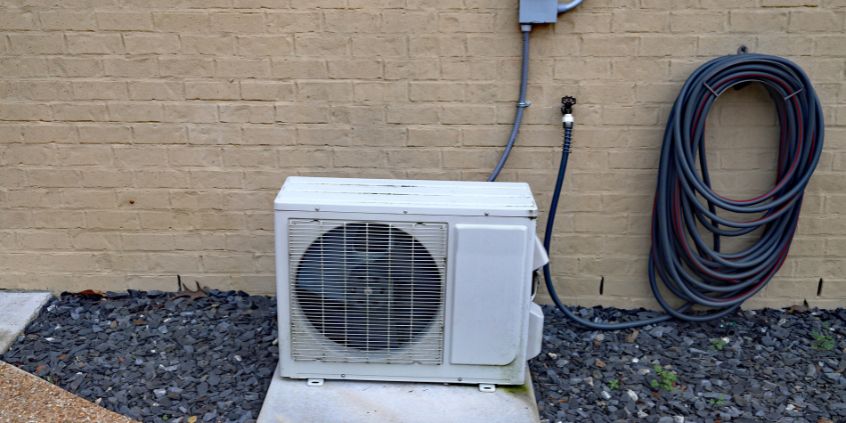
Ductless mini-split systems are becoming a popular choice for homeowners seeking efficient, flexible heating and cooling. However, before investing, it’s important to understand the real pros and cons of ductless mini split systems, including cost, performance, and long-term maintenance. This guide breaks everything down clearly so you can decide if it’s the right HVAC solution for your space.
What Is a Ductless Mini Split System?
A ductless mini split system is a heating and cooling solution that operates without ductwork. It consists of:
- An outdoor unit (compressor & condenser)
- One or more indoor air-handling units
These units are connected by refrigerant lines, allowing each room to be controlled independently.
This zoned approach makes ductless HVAC systems highly efficient and flexible compared to central systems.
Components of a Ductless Mini-Split System
There are several components of a ductless mini-split system, like:
- Indoor Unit (Air Handler): Contains the evaporator coil, blower fan, control board, and air filter for the room’s climate control. These units are usually wall- or ceiling-mounted and blow conditioned air directly into the space.
- Outdoor Unit (Compressor/Condenser): Houses the compressor, condenser coils, fan, and expansion valve that dissipate or collect heat outdoors. One outdoor unit can often support multiple indoor heads (commonly up to four or more).
- Refrigerant Line Set (Conduit): A small insulated conduit containing copper refrigerant tubing, power wiring, and a condensate drain line. This links each indoor unit to the outdoor unit.
- Controls: A wireless remote or wall-mounted thermostat is included for each indoor unit, enabling independent temperature settings per zone.
Ductless Mini Split Pros (Advantages)
1. High Energy Efficiency
Ductless systems eliminate energy loss from ducts (which can waste 20–30% energy).
Most units have high SEER ratings, significantly reducing electricity bills.
2. Zoned Cooling & Heating
Each indoor unit works independently, so you can:
- Cool only occupied rooms
- Set different temperatures per room
This improves comfort and saves energy.
3. Easy & Flexible Installation
- Requires only a small wall opening
- No ductwork needed
- Ideal for older homes or room additions
4. Quiet Operation
Indoor units operate at 20–30 decibels, making them much quieter than traditional systems.
5. Improved Indoor Air Quality
- Built-in filters trap dust and allergens
- No duct contamination (dust, mold buildup)
6. Heating + Cooling in One System
Mini splits use heat pump technology, meaning:
- Cooling in summer
- Heating in winter
Ductless Mini Split Cons (Disadvantages)
1. Higher Upfront Cost
Ductless systems are costlier per unit compared to window ACs or basic central AC. Multi-zone setups can be expensive if many indoor units are needed.
2. Multiple Indoor Units Required
Each room needs its own unit, which:
- Affects interior aesthetics
- Requires wall space
3. Professional Installation Needed
Incorrect sizing or installation can cause:
- Poor cooling performance
- Higher energy consumption
4. Limited Fresh Air Ventilation
Mini splits recirculate indoor air and don’t bring in fresh air by default.
5. Maintenance for Multiple Units
Each indoor unit requires:
- Filter cleaning
- Coil maintenance
More units = more maintenance work.
6. Reduced Efficiency in Extreme Cold
In very low temperatures, heating efficiency may drop (unless using advanced models).
Ductless vs. Traditional HVAC Systems
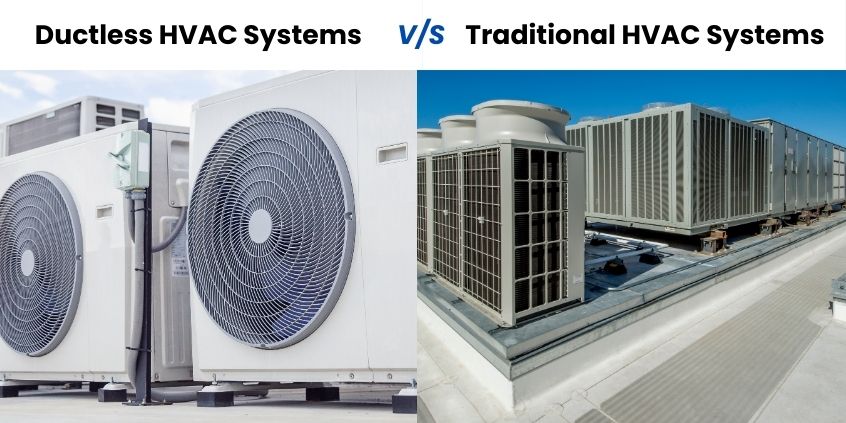
When comparing ductless and traditional HVAC systems, the first thing that walls the two off from each other is that ductless heating and cooling systems do not use a single, central compressor and air handler to cool or heat air and then redistribute it on the rooms of the house through a series of ducts, like most central HVAC units do. This complicated HVAC system frequently results in a 20–30% loss in energy consumption from leaking ducts or a lack of insulation.
And when you compare it with ductless mini-splits, the setup includes an indoor unit directly in each room, which helps avoid such losses and usually offers better efficiency per ton of cooling.
You can say that central systems are better for covering large areas from a single unit and can support extras like air filters, humidifiers, and fresh-air intake. Mini-splits, though, are quieter and more practical for retrofits or adding cooling to specific areas without major renovation work.
Installation and Maintenance Tips
Here are some tips to consider:
- Always get the installation done by a trained professional.
- Drill a 2–3-inch hole through the exterior wall for the conduit.
- Mount indoor units high on the wall for better airflow.
- The size of the unit must be chosen carefully based on the room size.
- Avoid oversizing or undersizing to prevent energy loss or poor cooling.
- Place the outdoor unit on level ground or a sturdy wall bracket.
- There should be enough space for a clear flow of air around the outdoor unit.
- Keep leaves, snow, and debris away from outdoor coils.
- Clean indoor filters once a month or more often if dusty.
- Check and clean the indoor coil and condensate drain periodically.
- Trim vegetation near the outdoor unit regularly.
- Schedule annual professional servicing for a full system check-up.
- Call a technician if there is weak airflow or unusual noise.
Importance of Professional HVAC Consultation
Since ductless mini-splits need precise refrigerant handling and accurate sizing, it’s always better to get the work done by a certified HVAC technician. Professionals use proper tools to charge refrigerants, calculate load based on room size, and follow safety codes.
Many brands won’t honor the warranty if not installed by a licensed contractor. A proper installation avoids common issues like incorrect pipe sizing or poor electrical work and helps the system run efficiently for years.
Conclusion
Now you know everything about a ductless mini split system there is. So, whether you are a homeowner or business owner, selecting the right mini-split system that fits your space, budget, and climate needs is just one step away.
With proper planning and expert installation, a mini-split can be an efficient, flexible heating and cooling solution for many settings. Trust All About Air Conditioning & Heating LLC to help guide you through the process and ensure a smooth, professional installation.
FAQS
Are ductless mini-splits worth it?
Yes, they offer high efficiency and zoned comfort, making them a smart long-term investment.
What are the disadvantages of mini-splits?
Higher upfront cost, multiple indoor units, and limited ventilation of fresh air.
How long do mini split systems last?
Typically, 15–20 years with proper maintenance.
Do mini-splits increase electricity bills?
No, they usually reduce energy consumption compared to traditional HVAC systems.