

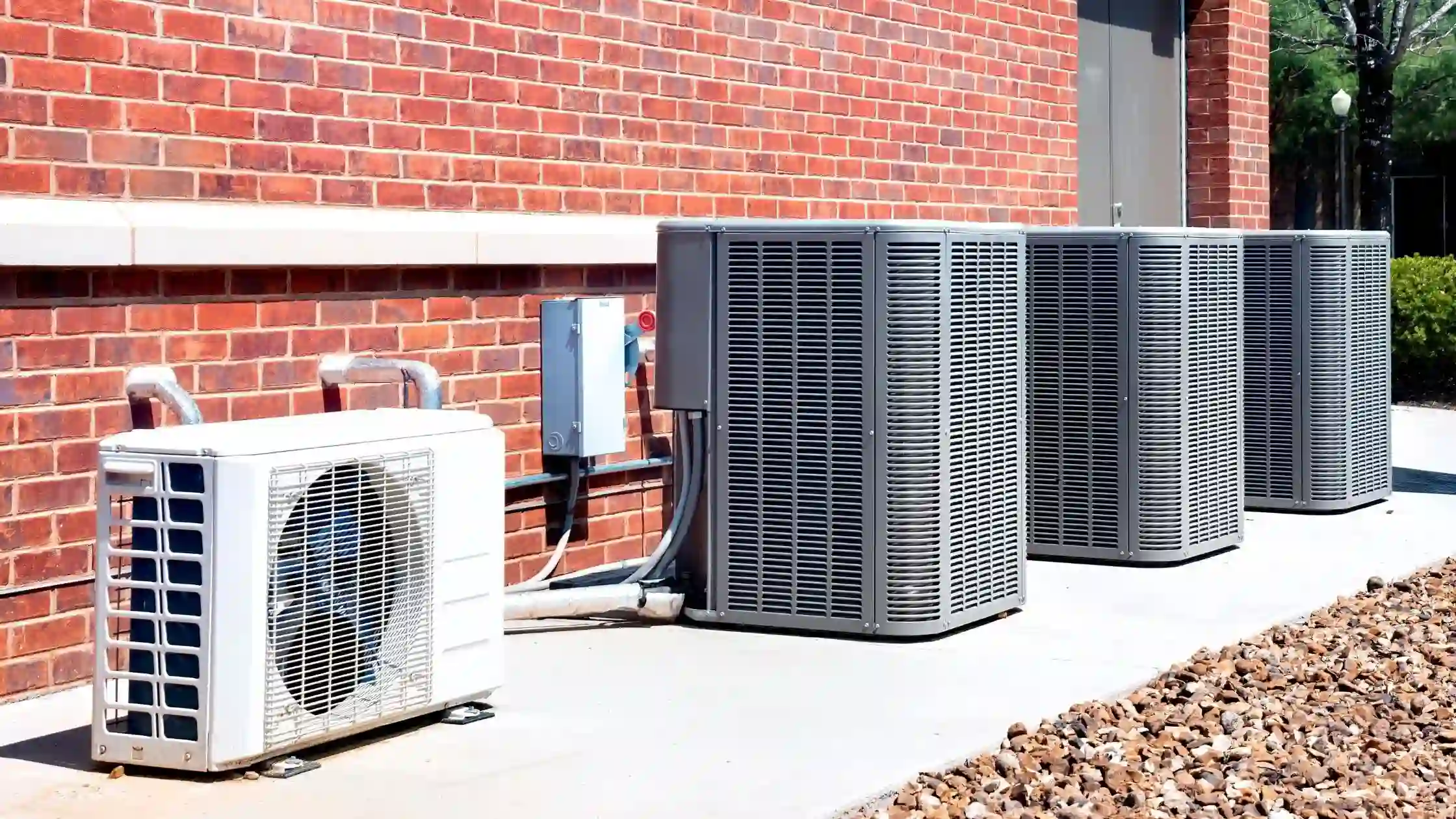
Heating, Ventilation, and Air Conditioning (HVAC) are essential for maintaining an indoor climate. When integrated within a structure, HVAC meticulously governs temperature, moisture levels, and the overall purity of air. HVAC delivers warmth in colder seasons, cooling relief in hotter periods, and continuous ventilation year-round.
The conditioned air has to be circulated through a network of ducts that deliver comfort to every room. Modern HVAC systems also contribute to air quality through dust elimination and the removal of various allergens and pollutants from the air. It ensures a healthy, comfortable interior environment, no matter the season.
Component of HVAC Systems
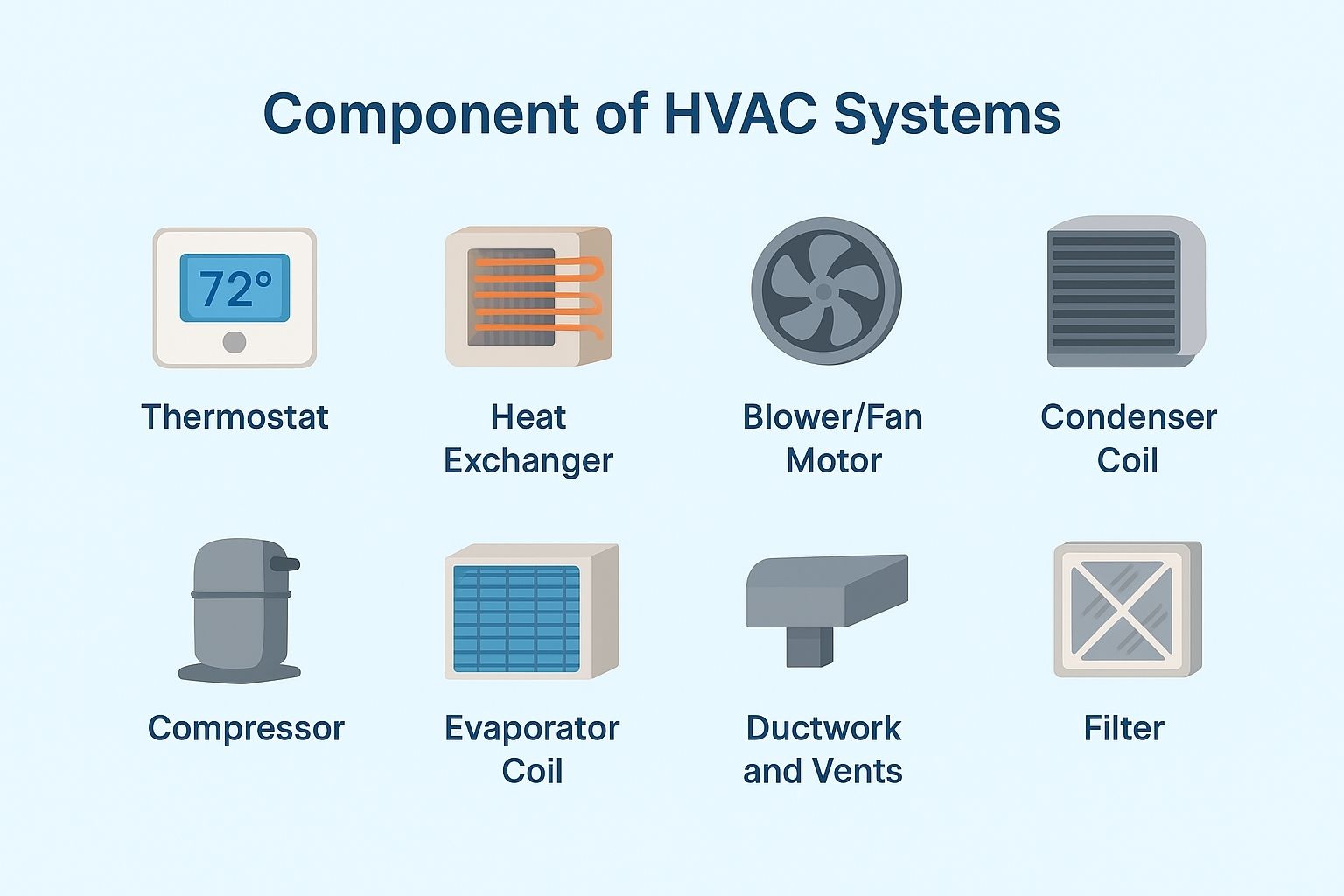
The essential components of an HVAC system work together to regulate temperature, air quality, and airflow throughout a building’s space. Each piece serves a different function that helps the system run efficiently and effectively. The various parts, from the thermostat to the ductwork, have been designed to ensure comfort and energy efficiency. Knowing what each part is used for allows one to understand how HVAC works seamlessly. Let’s examine a typical HVAC system and its various components.
1. Thermostat Heat Generator
The thermostat is the command center of an HVAC system. It allows you to set the desired temperature, which regulates when heating or cooling is needed. Once the indoor temperature drifts from that point, the thermostat signals the system to switch on or off, ensuring consistent comfort. Key components like the Thermostatic Expansion Valve (TXV) also play an important role in controlling refrigerant flow and maintaining efficiency.
2. Heat Exchanger
It is an integral part of the heat transfer operation in heating that allows the HVAC to conduct thermal energy from the heat source to the air while keeping combustion gases separate from the indoor environment. Heated air, warmed by streaming across the exchanger, now flows through the ductwork to distribute the heat throughout the house.
3. Blower/Fan Motor
The blower, or the fan motor, moves heated or cooled air via ductwork into the living spaces. It operates based on signals from the thermostat that call for consistent airflow. The blower ensures that conditioned air circulates throughout the building for maximum comfort and efficiency.
4. Condenser Coil
The condenser coil, located in the outside unit of the HVAC system, sheds heat gathered from within the home to the air outside. As the refrigerant courses through this coil, it enables heat to escape while shifting from a gas form back into a liquid, thus wrapping up the cooling phase.
5. Compressor
The compressor, acting as the fundamental engine of the HVAC’s cooling operation, resides in the exterior portion. It exerts a force upon the refrigerant, compelling it to shift from a state of minimal pressure into one of elevated pressure and temperature. This transformation facilitates the refrigerant’s journey throughout the apparatus, making possible the crucial exchange of thermal energy required for achieving efficient cooling outcomes.
6. Evaporator Coil
The evaporator coil is inside the HVAC system’s indoor unit. It absorbs heat from the indoor air by evaporating refrigerant into a gas. As warm air passes over the cold coil, the air cools down and is then distributed via the ducts to lower the temperature inside.
7. Ductwork and Vents
Ducts and vents are distribution methods for air conditioning in an HVAC system. Ducts carry heated or cooled air from the HVAC unit into rooms, and vents release the air into the living space. Properly designed ductwork means sufficient airflow and consistent comfort throughout. To dive deeper into the differences, read our detailed blog on air ducts vs. air vents and how each impacts your home’s comfort and energy efficiency.
8. Combustion Chamber
Combustion chambers are a significant part of HVAC systems powered by gas or oil and are typically found in furnaces. They are places where fuel mixes with air and then combusts, developing heat. The heat is transferred to the heat exchanger, while combustion gases are safely vented outside for efficient and safe heating.
9. Filter
It will make the air in your house cleaner, as dust, allergens, and other air particles are filtered out. Also, it stops the dirt buildup on the internal components of the system and ensures that, for a longer time, the operation is effectively executed. To keep the good quality of air and to ensure optimal performance amongst air systems, there is a requirement for regular cleaning or filter replacements.
Types of HVAC systems
HVAC systems come in several different types, each designed to meet specific heating, cooling, and ventilation needs. Choosing the right system depends on the size of the building, climate conditions, and energy efficiency goals. Here are the main types:
1. Split Systemes
This is the most common type, consisting of an indoor unit (air handler or furnace) and an outdoor unit (air conditioner or heat pump). Split systems are reliable, relatively affordable, and easy to service.
2. Hybrid Split Systems
Similar to traditional split systems but with the flexibility to use either electricity or gas for heating. This dual-fuel option helps improve efficiency and reduce energy costs.
3. Ductless Mini-Split Systems

Ductless mini-split systems are ideal for homes without ductwork, using indoor units connected to an outdoor compressor. They provide excellent energy efficiency and allow precise room-by-room temperature control, making them a flexible and practical option for modern homes.
4. Packaged Heating and Air Systems
In these units, all components—compressor, condenser, and evaporator—are housed in a single outdoor cabinet. Packaged systems are commonly used in smaller homes or buildings with limited indoor space.
5. Geothermal Heating and Cooling Systems
These use the earth’s stable underground temperature to heat and cool a building. While the installation cost is higher, geothermal systems are extremely energy efficient and environmentally friendly in the long run.
How Does an HVAC System Work?

An HVAC system works by coordinating heating, cooling, and air circulation to keep your indoor environment comfortable year-round. If you’ve ever wondered how does an HVAC system work, the process begins with the thermostat, which constantly monitors the indoor temperature. When the room gets too warm or too cold, the thermostat signals the system to turn on.
- Heating Mode: Heat is generated in the furnace or heat pump and transferred to the air through the heat exchanger. The blower then pushes this warm air through the ductwork, distributing it evenly across rooms. Combustion gases are safely vented outdoors to keep indoor air clean.
- Cooling Mode: In cooling, the system uses refrigerant to absorb heat from inside the home. The evaporator coil collects indoor heat, while the compressor and condenser coil, located outdoors, release it outside. The blower circulates the cooled air back through the ducts into your living spaces.
- Air Filtration and Ventilation: As air moves through the system, filters capture dust, pollen, and other particles, improving indoor air quality. At the same time, vents and ductwork ensure steady airflow, preventing hot or cold spots in different areas of the house.
To install an HVAC system efficiently or reliably, one should approach All About Air Conditioning & Heating, which has earned trust through experience in keeping homes and offices comfortable.